Choosing the right Juice Beverage Stabilizer can determine whether a drink stays smooth, attractive, and consistent from production to the final shelf.
Global buyers face different challenges. A clear apple drink may need cloud stability. A mango beverage may require pulp suspension and richer mouthfeel. Citrus products often demand careful control of separation, sediment, and viscosity. Pectin, xanthan gum, carboxymethyl cellulose, modified starch, and other hydrocolloids can support these goals, but they do not perform identically in every formula.
Small details matter.
This guide introduces ten widely considered stabilizer options for international juice beverage sourcing. It examines functional performance, dosage considerations, processing conditions, label expectations, and supplier documentation. Practical evaluation should include bench trials, accelerated storage tests, and production-scale validation. A powder that disperses well in cold water may behave differently after pasteurization or prolonged storage. That difference can be expensive.
Buyers should also review specifications, certificates of analysis, allergen statements, origin information, and applicable food regulations in each target market. Regulatory acceptance can vary between countries. A familiar ingredient is not automatically suitable everywhere. Cost alone is a weak selection method. Technical support, batch consistency, traceability, and delivery reliability deserve equal attention.
There is no universal best stabilizer. This is easy to overlook. The right choice depends on juice type, acidity, sugar level, processing method, packaging, and consumer expectations. Some recommendations may require adjustment after testing. That uncertainty is not a weakness; it is part of responsible product development. The following selection offers a practical starting point for global buyers seeking stable, appealing, and commercially reliable juice beverages.
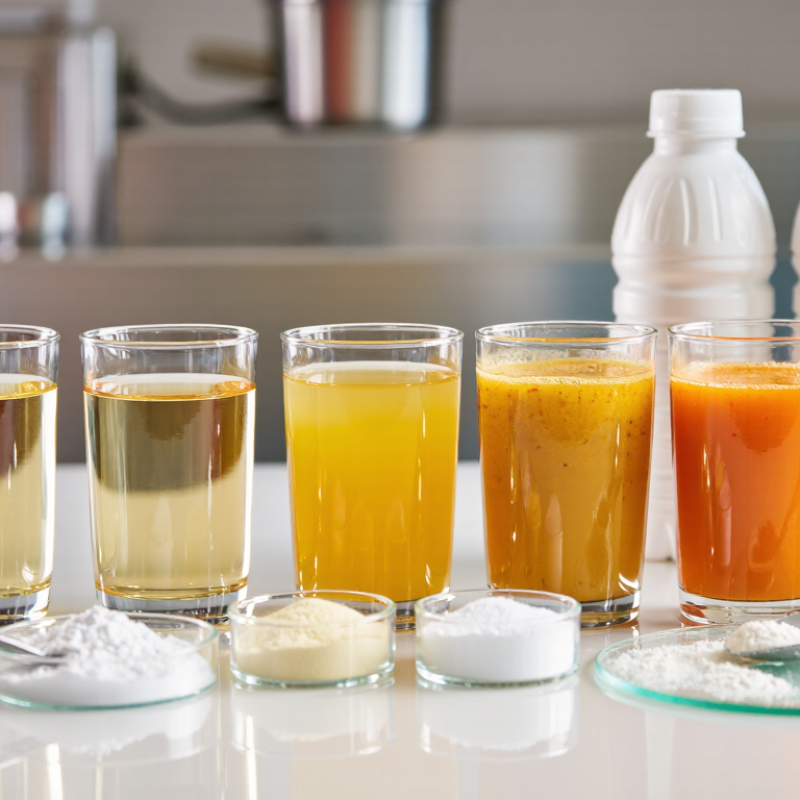
Juice beverage stabilizers control sedimentation, separation, and uneven mouthfeel. They are not simply thickening agents. In a clear bottle, poor stabilization can create a visible ring within days. The leading ten options include pectin, xanthan gum, carboxymethyl cellulose, gellan gum, guar gum, gum arabic, modified starch, alginate, carrageenan, and cellulose gum. Each behaves differently under acidity, heat, shear, and high sugar levels.
Market Scale and Formulation Performance Grand View Research estimated the global fruit juice market at approximately USD 137 billion in 2023. This scale increases pressure on manufacturers to protect appearance and consistency during storage and transport. Pectin can support body in acidic drinks, while gellan gum may suspend fine particles at very low use levels. Xanthan gum tolerates process stress well, but excessive use can create an unpleasant, slimy texture. That detail is often underestimated.
Mordor Intelligence projects continued growth in the beverage stabilizers market through the decade, driven by convenience drinks and longer distribution chains. Global buyers should compare dosage, hydration temperature, processing order, and regulatory status. Codex guidance helps, but destination-country requirements still differ. A natural-sounding ingredient is not automatically the best technical choice. Pilot testing remains essential. One formula rarely fits every juice.
Juice stabilizers help control texture, pulp suspension, and shelf life during storage and distribution. Pectin can create a smooth mouthfeel in acidic fruit drinks. Carboxymethyl cellulose supports body and reduces visible separation. Xanthan gum offers strong suspension at low use levels, although excessive amounts may feel slimy. Gellan gum can hold fine particles in a clean, light network. Guar gum, locust bean gum, and alginate adjust viscosity, but their performance depends on hydration and mineral content. Gum arabic improves emulsion stability in drinks containing flavors or oils. Modified starch can add body, while carrageenan suits selected formulations rather than every juice base.
Formulators should examine pH, soluble solids, pulp size, heat treatment, and filling conditions before choosing a system. A stabilizer that works in orange juice may fail in a cloudy apple beverage. Small changes matter. Poor dispersion can create floating clumps or sediment at the bottle bottom. Hydrating powders separately, controlling shear, and adding ingredients in a tested sequence usually improve consistency. Laboratory checks should include viscosity, centrifuge separation, particle distribution, and real-time or accelerated storage observations. Sensory testing remains essential because a technically stable drink may still feel heavy or artificial.
Shelf life is not created by stabilizers alone. Clean processing, suitable packaging, oxygen control, and validated preservation practices also influence quality. Some formulas need less gum than expected. Others require a blended system. There is no universal top choice; pilot trials reveal the practical answer.
Typical functional performance ratings for juice beverage formulation. Scores range from 1 to 5, where 5 indicates stronger support for the listed function. Ratings are comparative formulation guidance rather than laboratory measurements.
Choosing among the top ten juice beverage stabilizers requires more than comparing prices. Global buyers should match each ingredient with juice type, processing conditions, and consumer expectations. Pectin may support cloudy citrus drinks, while xanthan gum can improve suspension at low use levels. Modified starches, cellulose derivatives, alginates, and acacia gum may offer different mouthfeel and stability. Taste still matters.
In practical plant trials, I examine sediment after heat treatment, cooling, and seven days of storage. A stable sample should remain visually uniform without creating a heavy or slimy texture. The stabilizer must also disperse easily in the available mixing equipment. Small trials reveal flaws. Water quality can change hydration, especially when mineral levels vary between countries. Buyers should request technical specifications, allergen statements, microbiological data, and clear regulatory documentation for every destination market.
Cost per kilogram can mislead. A lower dosage may reduce total formulation cost, but only if the ingredient performs consistently across batches. I also check tolerance to acidity, pasteurization temperature, shear, and transport vibration. One formulation may work well in a laboratory beaker but separate inside a commercial tank. That assumption can fail. Sensory panels should assess flavor release, mouth coating, and aftertaste, not only visual appearance. Supply continuity deserves equal attention, because seasonal crops, port delays, or changing local rules can disrupt production. A second supplier and a confirmed storage plan reduce practical risk. My own preference is to approve performance first, then optimize price.
Comparative guide for selecting stabilizers in still juices, nectars, fruit drinks, cloudy beverages and juice-based formulations.
| Rank | Stabilizer | INS / E Number | Primary Beverage Function | Typical Starting Use Level | Best-Fit Juice Applications | Acid & Heat Performance | Key Global Buyer Considerations | Main Formulation Watch-Out |
|---|---|---|---|---|---|---|---|---|
| 1 | Pectin | INS 440(i)/(ii) E440 |
Suspension, mouthfeel, emulsion stabilization and controlled viscosity. | 0.10–0.50% | Fruit nectars, cloudy juices, fruit drinks, high-pulp beverages and juice-based smoothies. | Strong in acidic systems Performance depends on pH, soluble solids, calcium and heat treatment. |
Choose high-methoxyl or low-methoxyl grades according to sugar level and calcium content; verify fruit-specific compatibility. | Excess calcium or unsuitable pectin type can cause gelation, sediment or excessive thickness. |
| 2 | Xanthan Gum | INS 415 E415 |
Viscosity building, particle suspension and freeze–thaw support. | 0.03–0.20% | Pulp-containing drinks, juice smoothies, fiber beverages and formulations requiring strong suspension. | Broad pH and heat tolerance Generally effective across acidic beverage conditions. |
Provides high efficiency at low dosage and is widely recognized in international food regulations; confirm local labeling rules. | Overuse may create a stringy or slimy mouthfeel and can suppress fresh juice perception. |
| 3 | Gellan Gum | INS 418 E418 |
Low-dose suspension of pulp, minerals, vitamins and insoluble particles. | 0.01–0.08% | Clear or cloudy beverages, functional juice drinks and low-viscosity products with suspended particles. | Good acid and heat resistance Hydration and ionic conditions strongly affect performance. |
Useful when a clean, low-viscosity suspension is needed; screen low-acyl and high-acyl types for texture differences. | Incorrect hydration or mineral balance can produce flocs, weak suspension or an unwanted gel-like structure. |
| 4 | Carboxymethyl Cellulose (Cellulose Gum) | INS 466 E466 |
Viscosity control, suspension and stabilization of pulp or insoluble solids. | 0.05–0.30% | Fruit drinks, nectars, juice beverages with added fiber and reduced-sugar formulations. | Good process tolerance Usually stable in acidic beverages, subject to grade and process conditions. |
Provides economical viscosity control; select beverage-grade material with appropriate hydration and purity specifications. | High dosage can produce a heavy, lubricious mouthfeel and may slow powder dispersion. |
| 5 | Gum Arabic (Acacia Gum) | INS 414 E414 |
Emulsion stabilization, cloud retention, body improvement and flavor-oil protection. | 0.20–2.00% | Cloudy citrus drinks, flavored juice beverages, emulsified flavor systems and low-viscosity drinks. | Good acid compatibility Often suitable for pasteurized and carbonated beverage systems. |
Valuable for citrus oil emulsions and clean-label positioning; supply consistency and origin documentation are important. | It may require relatively high dosage and can be less effective as a standalone suspension aid for heavy fruit pulp. |
| 6 | Guar Gum | INS 412 E412 |
Rapid thickening, body enhancement and water binding. | 0.05–0.30% | Nectars, smoothie-style juice drinks, fiber beverages and high-solids fruit formulations. | Good cold-thickening ability Very high heat treatment and low-pH exposure may reduce functionality depending on grade. |
Often cost-effective and efficient at low dosage; assess microbiological specifications and viscosity consistency between lots. | Can create a gummy mouthfeel, hydrate unevenly or interact with other hydrocolloids. |
| 7 | Alginate | INS 401–405 E401–E405 |
Suspension, viscosity enhancement and controlled gel formation. | 0.05–0.30% | Fruit beverages with suspended particles, specialty juice drinks and products using calcium-triggered structure. | Sensitive to calcium and pH Requires careful control of ions, hydration and processing temperature. |
Useful where calcium interaction is part of the product design; select sodium alginate or another permitted salt for the target application. | Calcium-rich juice systems may cause premature thickening, flocculation or gel particles. |
| 8 | Locust Bean Gum | INS 410 E410 |
Body enhancement, texture improvement and synergistic gel or suspension support. | 0.05–0.30% | Premium nectars, thick fruit beverages and blends used with xanthan or other hydrocolloids. | Requires effective heating Hydration is improved by heat; acid and process severity should be validated. |
Can deliver a rounded mouthfeel and work synergistically with other gums; evaluate powder hydration and supply reliability. | Slow hydration or incomplete dispersion can lead to lumps, uneven viscosity and batch-to-batch variation. |
| 9 | Modified Food Starch | INS 1404, 1412, 1422, 1442, 1450 |
Body, suspension, emulsion stabilization and process tolerance. | 0.50–3.00% | Fruit preparations, opaque juice drinks, nectars, heat-processed beverages and economical texture systems. | Grade-dependent performance Acid, shear and heat resistance vary substantially by modification type. |
Specify the exact INS number, botanical source, processing tolerance and applicable country permissions before purchase. | Some grades can produce opacity, starchiness, sediment or viscosity loss under acidic high-temperature processing. |
| 10 | Carrageenan | INS 407 E407 |
Suspension, body and protein or mineral system stabilization. | 0.02–0.15% | Selected juice-containing drinks, fruit-and-dairy beverages and formulations requiring structured suspension. | Application-specific Acid and heat exposure can reduce functionality; performance depends on type and beverage composition. |
More suitable for specialized juice systems than for simple clear juices; confirm regulatory acceptance and consumer-label expectations. | Strong acid processing may cause viscosity loss, and unsuitable grades can create an overly firm or elastic texture. |
Note: Use levels are indicative starting ranges for formulation trials, not universal legal limits. Final selection should be confirmed through pilot testing for pH, °Brix, pulp load, mineral content, thermal process, shelf life, sensory profile and destination-market regulations.
Top 10 Juice Beverage Stabilizers and Their Main Applications
Juice stabilizers protect texture, appearance, and drinking quality during storage. Pectin supports fruit body and helps maintain a natural cloud. Carboxymethyl cellulose keeps pulp suspended and reduces visible separation. Xanthan gum provides strong viscosity at low dosage, especially in pulpy drinks. Gum arabic stabilizes citrus oils and supports flavor emulsion systems. Modified starch improves mouthfeel in juice beverages containing heavier solids. These materials behave differently.
Guar gum adds smoothness, but excessive use can create an unpleasantly thick texture. Gellan gum forms a light suspension network for pulp and functional particles. Sodium alginate helps control suspension, although calcium levels require careful management. Carrageenan can improve body in selected juice-based formulations, but acid stability needs testing. Microcrystalline cellulose supports cloud stability and reduces settling when properly dispersed. The best choice depends on acidity, soluble solids, processing temperature, and storage time.
In pilot trials, hydration order often matters as much as dosage. Poor dispersion can cause lumps, weak suspension, or inconsistent viscosity. I would not rank one stabilizer as universally superior. That assumption is convenient, but incomplete. Buyers should check food-grade specifications, allergen statements, permitted-use rules, and local labeling requirements. Small bench tests should measure sediment, phase separation, pourability, and flavor release after heat treatment and extended storage. Adjusting two compatible stabilizers may work better than increasing one ingredient. Yet every blend needs validation in the actual juice matrix.
International buyers commonly evaluate pectin, CMC, xanthan gum, guar gum, gum arabic, modified starch, gellan gum, carrageenan, alginate, and cellulose gum. Each option affects cloud stability, mouthfeel, sediment control, and processing cost. Pectin suits acidic fruit drinks. Gellan gum can suspend pulp at very low levels. However, performance changes with calcium, heat, pH, and shear. Practical trials remain essential. Formulas rarely behave perfectly.
Codex GSFA provides additive functions and permitted use conditions, but national rules may differ. The European Union requires additive authorization under Regulation (EC) No. 1333/2008, while the United States uses FDA food-additive regulations and specific labeling conventions. Buyers should verify INS numbers, E-numbers, allergen statements, and “modified” wording before approval. Innova Market Insights’ 2024 clean-label tracking shows continued consumer attention to recognizable ingredients, yet “natural” positioning still requires careful local review. Euromonitor International’s 2024 soft-drinks analysis also highlights ongoing demand for reduced-sugar and functional beverages, increasing the need for stable systems.
Tips: Request a current specification, certificate of analysis, non-GMO statement, allergen declaration, and country-of-origin document. Test three lots, not one. Confirm viscosity after shipping simulation. A supplier may meet the specification but still vary in hydration speed. That detail is easy to overlook. Use Codex, local authority databases, and an independent regulatory consultant before printing labels.
Match it to acidity, pulp level, processing conditions, and the texture you want. Pectin can support a natural cloud in acidic fruit drinks. No option works best everywhere.
CMC, xanthan gum, gellan gum, alginate, and microcrystalline cellulose can support suspension. Their performance depends on the juice matrix and mixing method.
Test samples after heat treatment, cooling, and storage. Check sediment, phase separation, pourability, and flavor release. A clear beaker result may not hold up in a production tank.
Poor dispersion can create lumps and uneven viscosity. Test the ingredient in your available equipment, using the actual water and mixing sequence.
Test at least three lots. Hydration speed can vary, even when each lot meets its specification. That difference may be easy to miss.
Request a current specification, certificate of analysis, allergen declaration, microbiological data, and country-of-origin document. Check non-GMO statements where relevant.
Compare cost per finished batch, not just price per kilogram. A lower-use ingredient may save money, but only if it performs consistently.
Ask panelists to check flavor release, mouth coating, thickness, and aftertaste. A drink can look stable but still feel heavy or slimy.
Acidity, calcium, heat, shear, water quality, and transport vibration can all matter. Simulate shipping conditions and confirm the storage plan.
Verify permitted uses, additive identifiers, allergen statements, and labeling rules in each destination market. Rules can differ, so confirm them before printing.
A Juice Beverage Stabilizer is a functional ingredient used to maintain consistent texture, improve suspension, and support the visual and physical quality of juice products during storage and distribution. By helping prevent pulp, flavor oils, minerals, or other suspended components from settling, stabilizers can create a smoother drinking experience and improve product stability throughout its shelf life. Their performance depends on factors such as beverage acidity, processing conditions, dosage, viscosity targets, and compatibility with other ingredients.
This article introduces ten commonly used stabilizer types and explains their main applications in juice drinks, fruit beverages, concentrates, and pulp-containing formulations. It also outlines how global buyers can evaluate stabilizers based on functionality, clean-label expectations, supply reliability, technical documentation, cost efficiency, and ease of processing. In addition, readers will learn why regulatory compliance, accurate labeling, allergen awareness, and responsible sourcing are essential when selecting ingredients for international juice production.

Tellcan Food