Which Is the Best Jelly and Pudding Stabilizer Type in 2026?
Choosing the best Jelly & Pudding Stabilizer is not a simple race between agar, gelatin, pectin, and carrageenan. Each system behaves differently inside a spoonful, a cup, or a chilled dessert display. Alan Imeson, a respected food hydrocolloid specialist, once stated, “A stabilizer must be judged by its performance in the finished food.” That principle remains useful in 2026.
Texture comes first. Agar can create a clean, firm gel that cuts sharply. Gelatin provides a softer, elastic bite and melts pleasantly in the mouth. Pectin may suit fruit-forward jellies, especially when acidity and sugar are carefully balanced. Carrageenan can support creamy puddings, but its texture may become too firm if the dosage is poorly controlled. Small changes matter. A tenth of a percent can alter the spoon feel.
The best choice depends on the recipe, process, storage temperature, and consumer expectation. A jelly for hot-fill packaging needs different protection from a pudding served cold in a glass cup. Mixing stabilizers can improve resilience, yet compatibility is not automatic. Some blends produce syneresis, weak gels, or an unpleasantly rubbery bite. I must admit that “best” is sometimes an unstable word. Laboratory results can look excellent, while the product disappoints after two weeks on a retailer’s shelf. This guide compares gel strength, clarity, mouthfeel, heat tolerance, freeze-thaw behavior, cost, and labeling considerations. Practical testing remains essential. Taste the product. Measure the product. Then question the result.
What Stabilizers Do in Jelly and Pudding
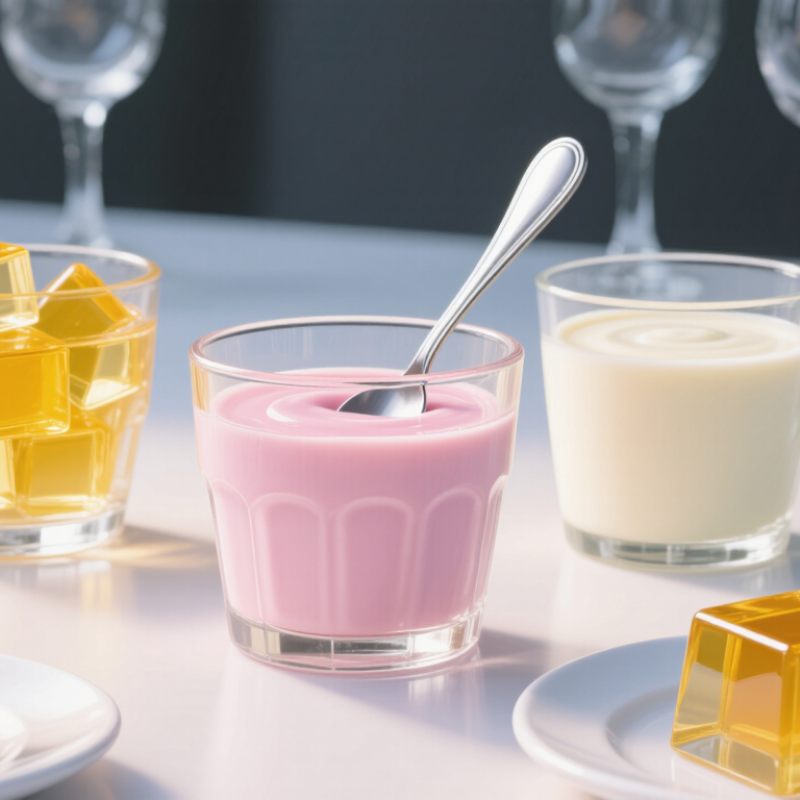
Stabilizers give jelly and pudding their structure, but they do more than make desserts firm. They bind water, control flow, suspend particles, and reduce syneresis, the watery layer that appears after storage. In jelly, gelatin, pectin, or carrageenan can create a clean cut and gentle spring. In pudding, starches and gums build viscosity, helping the spoon leave a smooth trail.
Small changes matter. A stabilizer may work well at 80°C, then weaken after prolonged heating or strong mixing. Acid can strengthen some pectin systems but damage others. Too much gum may produce a slippery or stringy mouthfeel. Texture is rarely perfect.
Market data shows why these ingredients receive closer technical attention. Grand View Research valued the global hydrocolloids market at about USD 11.1 billion in 2023, with continued growth projected through 2030. Mordor Intelligence estimated the gelatin market at roughly USD 3.5 billion in 2024. These figures reflect demand across desserts, beverages, and processed foods, not jelly alone.
A practical formulation test should measure firmness, syneresis, spoon resistance, and texture after refrigeration. Compare samples after one day and seven days. A pudding that looks excellent immediately may separate later. That weakness is easy to miss. The best stabilizer type in 2026 will depend on heating conditions, acidity, storage time, and the texture consumers actually prefer.
Key Criteria for Evaluating Stabilizers in 2026
Choosing the best jelly and pudding stabilizer in 2026 requires more than comparing texture. Performance should be judged across the full production process. A reliable stabilizer must provide consistent gel strength, smooth mouthfeel, and resistance to syneresis. It should also tolerate expected changes in pH, heating, cooling, and storage. Small variations matter. A glossy jelly can become watery after a week.
Practical trials remain essential. I would test each stabilizer in the intended recipe, not only in laboratory water. Measure firmness with a texture analyzer, then record drainage after refrigerated storage. Check the product at different serving temperatures. Sensory evaluation should examine elasticity, spoon release, stickiness, and flavor clarity. Some systems look excellent on day one but develop a rubbery bite later. That weakness is easy to miss.
Ingredient compatibility also deserves close attention. Proteins, fruit acids, minerals, sugar levels, and sweetener changes can alter performance. Review dosage tolerance, batch-to-batch consistency, supply stability, labeling requirements, and regional food regulations. Cost per finished portion is more useful than cost per kilogram. I once preferred a lower-cost option, then found its narrow processing window caused frequent rework. The result was not cheaper. It was simply harder to control. Even experienced formulators should repeat trials, because one successful batch proves very little.
Main Stabilizer Types Used in Jelly and Pudding
Which Is the Best Jelly and Pudding Stabilizer Type in 2026?
Choosing the best jelly and pudding stabilizer starts with texture, not fashion. Each type reacts differently to heat, acidity, sugar, and storage time. Gelatin creates a soft, elastic set that melts gently in the mouth. It works well for chilled puddings and delicate jellies. Agar forms a firmer, cleaner gel and remains stable at warmer temperatures. However, it can feel brittle if the dosage is too high. Pectin suits fruit-based jellies, especially those containing natural acidity and sugar. The final texture depends strongly on the fruit used.
Modified starch thickens pudding smoothly and tolerates extended heating. It can produce a spoonable texture without refrigeration during preparation. Carrageenan supports creamy dairy puddings and can improve suspension. Its performance changes with minerals, protein, and processing temperature. Xanthan gum and guar gum are useful in small quantities. They improve viscosity and reduce separation, but excessive use may create a sticky mouthfeel. Use them carefully.
In test batches, I measure texture after cooling, then again after twenty-four hours. A jelly may look perfect initially but release water overnight. My early trials often used too much agar, creating a hard, cracking surface. Now, I compare firmness, flavor release, cutting quality, and storage stability. The most suitable stabilizer depends on the recipe, serving temperature, dietary needs, and production method. Small changes matter.
How Stabilizer Types Compare in Texture and Stability
Choosing the best jelly or pudding stabilizer depends on the texture and stability required. Gelatin creates a soft, elastic gel that melts smoothly in the mouth. It suits chilled desserts with a delicate wobble. However, it weakens in warm rooms and may lose structure during transport.
Pectin works well in fruit jellies, especially when acidity and sugar are properly balanced. It produces a clean bite, but small recipe changes can cause noticeable differences. Agar forms a firmer, sharper gel and remains stable at higher temperatures. The texture can feel brittle, though. I have found that overusing agar makes a dessert seem dry, even when its moisture level is acceptable. Starch gives pudding a creamy, spoonable body and tolerates many flavor combinations. It can become pasty if heated too aggressively.
Dairy puddings may benefit from carefully selected hydrocolloid combinations. Carrageenan can improve suspension and create a smooth, lightly elastic texture, while starch provides fullness. The ratio matters more than the ingredient name. A practical test is simple: chill samples overnight, leave them at room temperature, and examine the cut surface. Watch for water release, shrinking edges, or a rubbery bite. Results may vary with calcium, sugar, acidity, and processing time. That uncertainty deserves attention. A stabilizer that performs perfectly in a small kitchen batch may behave differently at larger scale.
Selecting a Stabilizer for Different Jelly and Pudding Recipes
Which Is the Best Jelly and Pudding Stabilizer Type in 2026?
Selecting a stabilizer depends on texture, serving temperature, and the recipe’s acidity. Gelatin creates a soft, elastic jelly that melts pleasantly in the mouth. It suits chilled puddings, cream desserts, and delicate fruit layers. However, it weakens in very hot conditions and may not suit every dietary preference. Use it carefully.
Agar forms a firmer gel with clean slices and strong heat resistance. It works well for tropical fruit jellies, molded desserts, and puddings served in warm rooms. Its texture can feel brittle if the concentration is too high. I have found that a small reduction often improves the mouthfeel, though results vary with sugar and fruit solids.
Pectin is useful for fruit-forward jellies because it supports a bright, natural texture. Acid and sugar usually affect its setting performance, so measurements need close attention. For creamy puddings, starch can provide body, while a small amount of another stabilizer may reduce weeping. Carrageenan can help maintain smoothness in milk-based recipes, but overuse may create an unwanted firmness. Test a small batch first. Temperature changes matter. Even experienced cooks sometimes misjudge cooling time, especially with deep molds. My own trials are not always consistent, and that is worth checking before serving guests.
| Which Is the Best Jelly and Pudding Stabilizer Type in 2026? - Selecting a Stabilizer for Different Jelly and Pudding Recipes |
| Stabilizer Type |
Best Recipe Applications |
Typical Texture and Set |
Key Preparation Needs |
Important Considerations |
| Gelatin |
Soft fruit jellies, panna cotta, chilled mousse, and molded desserts |
Smooth, tender, elastic gel that melts in the mouth |
Hydrate in cool liquid, then dissolve gently in warm liquid; chill to set |
Animal-derived and not suitable for vegetarian or vegan recipes. The gel softens with heat and is reversible when gently warmed. |
| Agar |
Vegan fruit jellies, firm-cut dessert cubes, and jellies served at warmer room temperatures |
Firm, clean-cut gel that is generally less elastic and more brittle than gelatin |
Bring to a boil to dissolve and activate; sets as the mixture cools |
Sets at a higher temperature than gelatin and usually remains firm at room temperature. Acidity and prolonged heating can affect gel strength. |
| High-methoxyl pectin |
Traditional fruit jams, fruit jellies, and high-sugar fruit dessert gels |
Fruit-like, spreadable to sliceable gel, depending on the formula |
Requires the right combination of sugar and acidity; heating is commonly used to dissolve and distribute it |
Not a direct substitute for gelatin in low-sugar pudding. The amount of sugar, fruit composition, and acidity influence the set. |
| Low-methoxyl pectin |
Reduced-sugar fruit gels and some fruit-based dessert fillings |
Soft to firm gel, depending partly on calcium availability |
Needs calcium ions to form a gel; calcium level and pectin type must be matched to the recipe |
Can be useful when a high-sugar formula is undesirable. Excess or unevenly distributed calcium may cause a weak, uneven, or overly firm set. |
| Carrageenan |
Milk-based puddings, dairy desserts, and some plant-based milk desserts |
Varies by type: kappa tends to form firmer, more brittle gels; iota tends to form softer, more elastic gels |
Disperse thoroughly and heat as required by the ingredient and recipe; milk proteins and mineral salts can affect performance |
Choose the carrageenan type for the desired texture. Results depend on the dairy or plant-milk base and its mineral composition. |
| Starch |
Cooked puddings, custards, pie fillings, and spoonable dessert creams |
Thick, opaque, and spoonable; usually a paste rather than a clear, elastic jelly |
Disperse in liquid and heat to allow the granules to swell and thicken; follow package directions for the starch type |
Native starch can lose thickness with prolonged heating, acidity, or stirring. Modified starches are available for recipes that need greater processing stability. |
| Xanthan or guar gum |
Thickened cold desserts, sauces, and blended pudding formulations where extra viscosity is needed |
Increases thickness and helps limit separation; usually does not create a firm, sliceable gel on its own |
Disperse evenly to reduce clumping; hydration and performance vary with the gum and recipe |
Best used when the goal is body or suspension rather than a classic jelly set. Excess can produce an overly thick or gummy mouthfeel. |
Selection tip: For a chilled, tender set, consider gelatin; for a vegan firm jelly, consider agar; for fruit preserves, choose pectin suited to the recipe’s sugar and calcium conditions; and for spoonable pudding, starch or a dairy-compatible stabilizer is often a better fit. Always test the complete recipe, since acidity, sugar, minerals, heating, and cooling affect the final texture.
FAQS
Check gel strength, mouthfeel, syneresis resistance, and storage stability. Test heating, cooling, pH changes, and serving temperatures.
Laboratory water cannot show every ingredient interaction. Test the stabilizer in the actual recipe, including fruit, sugar, proteins, and minerals.
Use a texture analyzer after cooling and again after twenty-four hours. Also check spoon release, elasticity, stickiness, and cutting quality.
Gelatin creates a soft, elastic gel with gentle melting. It suits chilled puddings and delicate jellies.
Agar forms a firm, clean gel and tolerates warmer serving conditions. Excessive dosage may create a brittle or cracking texture.
Pectin suits fruit recipes containing natural acidity and sugar. Results vary because each fruit has different composition and acidity.
Modified starch can thicken pudding smoothly during extended heating. It supports a spoonable texture before refrigeration.
Xanthan gum and guar gum can increase viscosity and reduce separation. Too much may create a sticky mouthfeel.
Refrigerate samples and record drainage after several days. A glossy jelly may become watery after one week.
Not always. Calculate cost per finished portion, rework, and processing losses. I once chose a cheaper option and regretted it.
Conclusion
Choosing the best Jelly & Pudding Stabilizer in 2026 depends on the texture, stability, and serving conditions a recipe requires. Stabilizers help control water movement, create a smooth or firm set, and maintain consistency during storage and serving. When comparing options, consider factors such as the desired mouthfeel, ingredient compatibility, preparation method, temperature tolerance, and how long the finished dessert needs to hold its shape.
Common stabilizer types can produce different results: some create a delicate, tender gel, while others provide a firmer set or a creamy, spoonable texture. Their performance may vary with acidity, sugar content, heating, and refrigeration, so there is no single choice that suits every recipe. For fruit jelly, molded desserts, or creamy pudding, match the stabilizer to the recipe’s ingredients and desired finish, then follow appropriate preparation and usage guidance for a reliable result.

 Tellcan Food